
Showing posts with label messaging. Show all posts

Saturday, October 15, 2011

Google, Failure and Platforms


Photo from Sixth Lie

After reading an article on Google's inability to be accessible, I started to muse how Google will survive the failures of Wave and now Buzz.

It has been said that failing forward makes way for success down the road, but that means that you need to learn from your failures.  But Google doesn't seem to be doing that with 2 big flops and from the rant, I wonder if the message wasn't getting through to Google.  Perhaps Yegge was what Google needed to right the ship.

In the long run, I think Google will hold its own and succeed, but in the short-term will navigate these failures and move on.  They are too big to consider the latest strings of failures to be fatal.

What I appreciated about Yegge's rant was that it made me and a colleague think through what is our online platform to share Jesus Christ.   Do we have a platform that we use and "eat our own dogfood" as well?  Are we making it accessible so that so called "third-parties" can use it to help share Christ themselves?

It may seem odd to some that we need to think this way, but I think we need to look how we can create a platform to share Jesus to as many people as possible and I do think that means looking at an online platform that can multiply the task of bringing the Good News of Jesus.

Tuesday, March 30, 2010

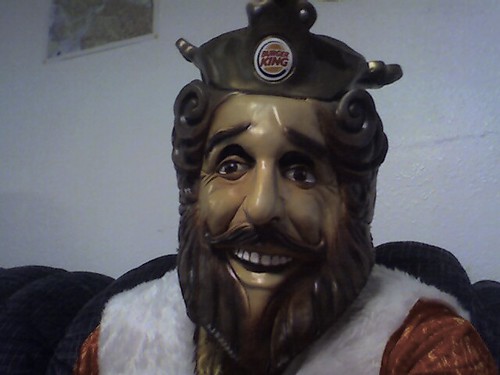
Burger King Cologne and thinking big

This is a series of posts on the Art of Marketing conference. This one is based on Max Lenderman's session.

There have been a lot of companies that have thought big to reach a wider audience. For instance, Burger King went out of the box by releasing Fire Meets Desire Burger King cologne. Not only did the cologne sell out, the marketing reached a lot more people than just regular Burger King customers.

They also partnered with Microsoft to create $3.99 XBOX games that they sold at regular BK restaurants. They sold out all that were made and kids and adults played games featuring the goofy looking King mascot at home.

Burger King went big to invest in their brand and generated acceptance into people's consciousness (i.e. I used to hate the King, but after watching the cologne add and being exposed to the quirky mascot more, I'm not so much hating anymore). What are you doing to think big?

What my team needs to do:

This is a more difficult issue to apply for non-profits as expanding the core audience is tricky when the organization doesn't want to confuse what message they are sending. However, big thinking can tap into the emotional side of people to identify a need (this idea comes from Switch, by Chip and Dan Heath of which I will blog more extensively on soon) and draw them in.
  1. Partner with a humanitarian partner, to appeal to the emotional side of people who agree that the oppressed need to be defended and to bring justice to those who are exploiting the poor. Launch a campaign that will couple the message of Jesus with human freedom.
  2. Re-think how we promote our brand. Currently, we barely creep above the threshold of awareness with our audience. What can we do that keeps up there on par with more prominent organizations that reach our same audience?
photo courtesy of zieak on flickr

Tuesday, March 16, 2010

It's Not About How Many But Who

This series of posts are reflections from the Art of Marketing conference. This one is based on Mitch Joel's session.

"We are in that war of making sure we get to the right people." Mitch Joel

Often times when we advertise a certain type of event, whether that be on campus, in church or in the public forum, we aim to get as many eyeballs to read what we are promoting. We then sink money into making sure it is of great quality and that it is drawing those eyeballs to the promotion.

But we fail to realize that the most important thing that underlies our success in the first place is getting our message or product to the right people. It is because the right people will do the work to reach the masses in the long run. As a result, there are times the mass marketing strategies overlook the right people and thus fail to connect with them.

I am on teams that this concept applies to like my church.  What we need to think about are:
  1. Decide whether we have one message (to promote to non-Christians) or two messages (one for non-Christians and one for Christians).
  2. Review our strategies to see if they are reaching the right people. Did we plan these events with the right people in mind or were they just good ideas that we think can reach the right people?
  3. Identify the mass marketing that we do, axe them and divert resources to reach the right people.
Question to think about - Is there a place for mass marketing in today's world?

Friday, March 5, 2010

We Need to Be Artists

This series of posts are reflections from the Art of Marketing conference. This one is based on Seth Godin's session:

Art gets noticed because art, by its existence, is different from what is normal. People crave creativity and when they find art they like, they share it. That makes you, the creator of the art, more indispensable and your career more secure. You become a leader.

However, in a non-profit environment, job security is not the top of the list - the message is. Are we artists in communicating our message? Will it arise from the humdrum of the million other messages out there? Will we lead out with our message?

Action points for the team I am on:
  1. Have a crystal clear message we want to communicate
  2. What are we doing that is following a manual or tradition? Identify it and scrap it.
  3. Discover a way to communicate the message that is easily shared
  4. Allow an environment where ideas can be acted upon without instruction by empowering others to lead
What do you need to do to create art where you are at?