
Friday, January 20, 2012

The Modern Meeting


Photo by thinkpanama
The past 2 days were one of the most productive meetings that I have attended for some time.  Part of it was because some of us have read some principles from the Modern Meeting.  Here are 3 points on why I think it was a successful time.

1) The leader had a decision that we could discuss and implement.  
Modern meetings are more effective when a decision is the starting point to either debate or implement.   Instead of spending hours brainstorming and evaluating different decisions, a decision was made and the team had something to refine, debate, and/or implement.

2) We had group work sessions
Instead of attacking an issue with the whole team, the leader split the group into group work sessions.  It was not a "meeting" but a time where team members were "making hay" (i.e. getting work done) along side each other.  As a result we had a plan and action points to present and confirm in the next block of meetings.

3) We had a distinct time for brainstorm
Although usually recommended for those who are not directly responsible for the outcomes of suggestions coming out of a brainstorm, it was great to have a time where there was freedom to think through what our team can do.  It involves creativity and dreaming which was a welcome break from the other agenda items.  I think this brainstorm session worked because participants knew that just because they thought of something, it didn't mean that they were going to tasked to do it.  There is freedom when that environment is established for creative and helpful brainstorm.

There are other things that were implemented and other things we could improve on, but I was greatly encouraged by the new approach to meetings.  What are some meeting tips that you recommend that has helped meetings you attend to be highly effective?

Saturday, October 15, 2011

Google, Failure and Platforms


Photo from Sixth Lie

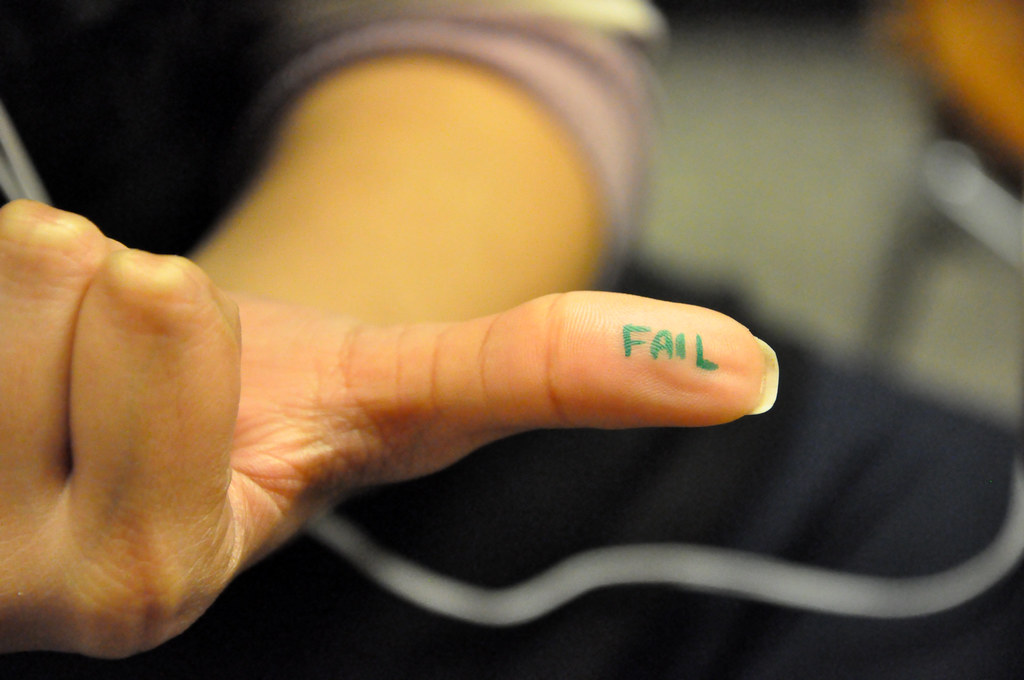
After reading an article on Google's inability to be accessible, I started to muse how Google will survive the failures of Wave and now Buzz.

It has been said that failing forward makes way for success down the road, but that means that you need to learn from your failures.  But Google doesn't seem to be doing that with 2 big flops and from the rant, I wonder if the message wasn't getting through to Google.  Perhaps Yegge was what Google needed to right the ship.

In the long run, I think Google will hold its own and succeed, but in the short-term will navigate these failures and move on.  They are too big to consider the latest strings of failures to be fatal.

What I appreciated about Yegge's rant was that it made me and a colleague think through what is our online platform to share Jesus Christ.   Do we have a platform that we use and "eat our own dogfood" as well?  Are we making it accessible so that so called "third-parties" can use it to help share Christ themselves?

It may seem odd to some that we need to think this way, but I think we need to look how we can create a platform to share Jesus to as many people as possible and I do think that means looking at an online platform that can multiply the task of bringing the Good News of Jesus.


Thursday, September 2, 2010

My Two Cents on Why the iPad is Game Changer

I remember a while back when Xbox, Playstation and Nintendo fanboys were duking it out on message boards on what system was the best. As the systems evolved into more powerful iterations, the target audience for the systems changed. Nintendo started to target a different type of video game player - the casual gamer and Microsoft and Sony stayed with the "hardcore" gamers who have grown up from their 80s 8-bit systems to be adults who demanded more involved and graphic games.

The result? The Wii system sold over 70 million consoles with the Xbox 360 at 42 million and PS3 at 38 million (figures approximate).

I believe what Wii is to the console video game market is what iPad is to the mobile computing market now. You hear people complain that the iPad can't do this or do that, but I don't think Apple is targeting the person who wants an all-in-one computer. Apple is targeting the "casual" computer user.

Case in point - my friend has a MacBook Pro and recently bought an iPad. When we visited her over the summer, I did not even see the MBP, just the iPad. All her needs were met including reading blogs, checking Facebook and playing games.

When I had the iPad for a few weeks, I found myself picking up the iPad to pass the time instead of powering up my laptop. I believe this is what Steve Jobs was aiming for - a computer for casual computer use - not to replace the working computer.

And that is why I think it is a game changer and make Apple millions of dollars.

What are the implications of this for your organization?

Questions for my team to wrestle with:
  • Will students access our sites using the iPad more than traditional laptops and desktops?
  • Is the iPad mobile enough for students to carry it everywhere they go? Should it be included as a device to consider in a mobile strategy?


Photo credit: ahhyeah and geehail2

Thursday, August 19, 2010

Fearing Complacency

Complacency is a deadly foe of all spiritual growth
A.W. Tozer, Pursuit of God


In a recent blog, Google, the company, was being compared to Pixar. The comparison came in light of Google transitioning to a mature phase of their core business and strives to expand. Pixar has a string of 11 straight blockbuster hits and shows no sign of slowing down. What can Google learn from Pixar?

It is the fear of complacency that is part of the DNA of the whole company. This results in a continual evaluation process of their work and direction and leadership that identifies new problems to be solved to be discussed openly and in humility. This has great application to all companies and organizations that had some past success. "Success hides problems" and leads to complacency and resting on their laurels.

I believe spiritual organizations having their foundation on God and His Word can learn from Pixar. We are not just organizations, but spiritual movements dealing with spiritual adversity. If complacency is allowed to happen in our personal relationship with Jesus, our spiritual growth is flat-lined, and in some cases even becomes a decline. Tozer argues that we have lost our acute desire for Christ - the worshiping, seeking and longing for Christ and is due to the present state of the church expecting that the leaders do the worshiping, seeking and longing for us.

This directly relates to the effectiveness of the organization or church we work for. If we are complacent in our relationship with God, our organization/church that is founded in God will be complacent as well.

Are we complacent? Do we fear complacency in our relationship with God like how Pixar fears complacency in making animated movies? What do you need to do to guard against complacency?

I need to:
  • Make sure I am continually seeking, longing and worshiping God (John 15)
  • Continually evaluating, in God's grace, how I am doing in obeying and applying God's word
  • Keeping the organization's vision fresh in my memory and actively communicating the vision to all stakeholders
Photo credit: VerismoVita

Saturday, July 31, 2010

How Twitter has added value to my life the last month

In addition to the many uses Twitter has (e.g share resources, communicating within a tribe), Twitter is an evolving tool that continually surprises me on its usefulness - and I have found some more this past month.
Twitter binds a community together via an event by collectively learning and commenting on what is happening live. This past week, i attended two conferences in which we used a hashtag to keep track of tweets for the conference. Not only did it help keep relevant quotes and main points fresh in the mind of tweeters, it helped give useful feedback to conference directors. One example of collective learning is a colleague who noticed that I tweeted a quote (tweets with conference hashtag were displayed at the beginning and end of main sessions) that he wanted to use for future work and can now find it on Twitter. Another example are conference attendees lobbying conference directors to invite a keynote speaker for next year's conference.

Twitter communication to the crowd can be very effective. A colleague needed quarters during a strategy session and said he would believe the power of Twitter if he gets quarters if someone tweeted his need. Within 10 minutes, a fellow conference attendee appeared with quarters for him. He now reactivated his Twitter account.

Twitter increases customer service. I stayed at a Westin hotel and my wife and I noticed cigarette smoke smell wafting into our room. I called front desk to report it hoping they would track it down. After a second call, they sent someone to the room to confirm the smell - but their explanation wasn't convincing.. I tweeted the incident using the hashtag #westin and within 20 minutes, i received a reply from @Starwood Buzz, the organization that owns Westin hotels. They asked me to direct message where I was staying to them. Within 10 minutes, the express service manager called me to see if things were resolved. At that time, the smell subsided. But when the smell came again later on that evening, they sent 2 engineers to check it out and found out our neighbor was smoking inside the room. As a result of missing the cause the first time, the on duty manager sent us a card and a fruit plate - a nice personal touch to an apology. What a great use of Twitter for enchanted customer service.


Twitter helps me find lost items. In the rush of things, we left our camera bag with the camera and expensive lenses inside. After a futile search, I finally tweeted asking if anyone in our bus saw a bag left behind. A team member did see it and was about to get but then security stepped in and claimed it thinking it was a security threat. Andrew called me to tell me security got it and I immediately contacted lost and found and sent them an online message (hooray for free wi-fi at airports). They are now couriering our camera back to our home.

What other useful applications you are finding Twitter is useful for?

Photo credit: 7son75

Monday, July 26, 2010

Being with people

When working in Operations, it can be easy to be holed up in a room and do everything virtually, especially when the people you support, collaborate with, and enable are all over the country. However, I have found that interacting with the people I support and help out in the organization on an operational level on a physical, face to face, personal level does a lot to bring trust and goodwill into the working relationship.

This can be achieved in many different ways including giving seminars at a conference, eating meals together with the staff, playing teams sports and having an impromptu question and answer time with the people you help out with. However, I found that playing a game of RISK 2210 A.D. the most effective and enjoyable time to build trust and goodwill.

What are some ways which you find helpful in building trust and goodwill with clients and staff who you support and help?


Photo credit: Matt Sklar

Monday, April 26, 2010

Bottlenecks

I was recently at a Diary Queen buying their buy one Blizzard and get a second one for 25 cents sale. The Diary Queen was quite busy and the line long. I didn't mind - as long as I got my Blizzards. However, in observing how the workers served the customers, I noticed two things:


  1. The employees never offered anything with the Blizzards - just a spoon
  2. There was no self-serve of napkins, lids or any extra thing that a customer might need
This led to customer after customer asking for a lid, napkins or even a tray from the employees that disrupted their service of the next customer and increased the wait time for those who are waiting for their Blizzard.

If the manager could just stand back and watch this unfold, they could have identified the bottleneck (employees serving a customer a 2nd or 3rd time to give them extra stuff) and make a self-serve table where customers can get these items. Or at least have all employees ask whether customers want a lid or napkin too when they hand over the Blizzard.

Do you take the time to step back to identify the bottlenecks in your organization? Are there areas in which the people you serve can serve themselves?

photo courtesy of ToastyKen on flickr